
You open a bank account, and the teller asks: “Will that be checking, savings, or both?” If you’ve ever hesitated before answering, you’re not alone. Most Americans grow up with at least one of these accounts without ever stopping to ask why — or whether the other one is actually necessary. The truth is, checking and savings accounts serve very different purposes, and understanding those differences could be the first step toward managing your money more intentionally. Let’s break it all down so you can decide what actually makes sense for your life.

n
What Is a Checking Account?
A checking account is your everyday transaction hub. It’s where your paycheck lands, your bills get paid, and your debit card draws from. The defining feature of a checking account is unrestricted access — you can make as many deposits and withdrawals as you want, whenever you want.
How Checking Accounts Work
When you open a checking account, the bank assigns you an account number and a routing number. These two numbers are how money flows in and out — direct deposits use them, bill pay systems use them, and paper checks include them at the bottom. Your debit card is essentially a plastic key that lets you access the same funds in real time at ATMs, stores, and online.
Types of Checking Accounts
- Standard checking: Basic access with a debit card, online bill pay, and mobile banking
- Interest-bearing checking: Earns a small amount of interest on your balance, usually requires a higher minimum balance
- Free checking: No monthly maintenance fee, often with no minimum balance requirement
- Student checking: Designed for college students, typically with no fees and lower balance requirements
- Business checking: Higher transaction limits and features designed for business use
Common Checking Account Fees to Watch
- Monthly maintenance fees ($5–$25, often waivable with direct deposit or minimum balance)
- Overdraft fees ($25–$35 per transaction at many banks)
- Out-of-network ATM fees ($2–$5 per withdrawal)
- Paper statement fees ($1–$3/month if you opt out of e-statements)
What Is a Savings Account?
A savings account is designed for money you don’t plan to spend right now. Its whole purpose is to hold funds safely while earning a modest return. Unlike a checking account, a savings account has traditionally been limited in how often you can withdraw — designed to encourage you to actually save.
How Savings Accounts Work
Your savings account balance earns interest, expressed as an Annual Percentage Yield (APY). Traditional brick-and-mortar banks often pay as little as 0.01% APY. High-yield savings accounts (HYSAs) at online banks, however, regularly offer 4–5% APY or more, making them a significantly better option for most savers. Interest is typically compounded daily and credited monthly.
Types of Savings Accounts
- Regular savings: Offered at your local bank or credit union, low interest rate, easy access
- High-yield savings (HYSA): Online banks offering 10–100x more interest than traditional savings accounts
- Money market accounts: Hybrid accounts that earn higher interest and may offer check-writing privileges
- Certificates of deposit (CDs): Fixed-rate accounts where you lock money in for a set term in exchange for a guaranteed higher rate
The Old Savings Withdrawal Rule
For decades, Regulation D limited savings account withdrawals to 6 per month. The Federal Reserve suspended this rule in 2020, but many banks still enforce it internally or charge fees for excessive withdrawals. Before relying on your savings account for frequent access, confirm your bank’s policy.
Key Differences Between Checking and Savings
Side by side, the differences become clearer — and help explain why financial experts often recommend having both.
Access and Liquidity
- Checking: Immediate access via debit card, ATM, checks, and bill pay. Designed for daily use.
- Savings: Accessible but not designed for daily spending. May have transaction limits. No debit card in most cases.
Interest Rates
- Checking: Most earn 0% or near-zero interest. A few interest-bearing checking accounts exist but are less common.
- Savings: Earns interest — from minimal (traditional banks) to competitive (high-yield online accounts). Your money grows while it sits.
Purpose and Psychology
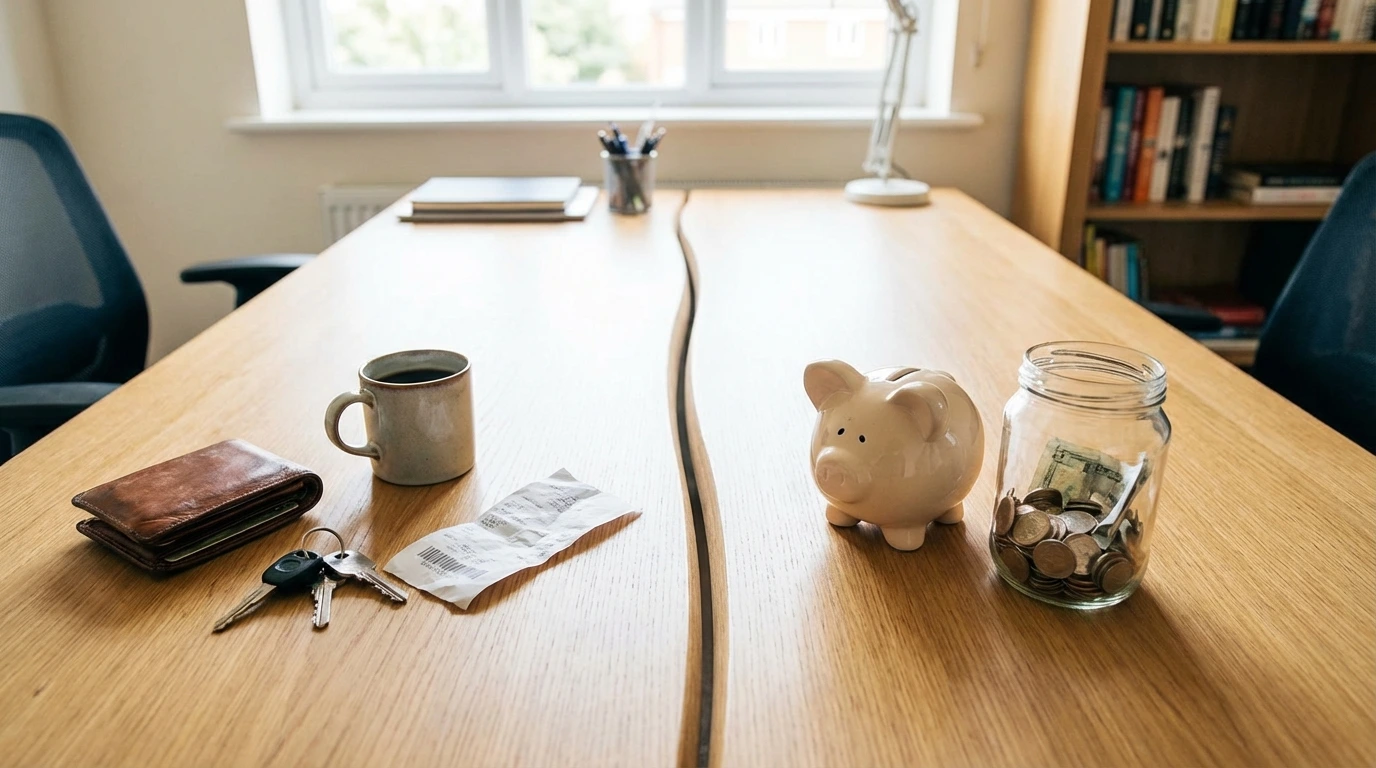
Keeping your spending money and savings in separate accounts creates a psychological barrier that works in your favor. When your savings is one tap away in the same account as your checking, it’s too easy to spend it. A separate savings account forces you to be intentional.
FDIC Insurance
Both checking and savings accounts at FDIC-insured banks are protected up to $250,000 per depositor, per bank, per ownership category. Your money is safe in either account type — as long as you stay under the limit.
n
Do You Really Need Both?
Here’s the honest answer: for most Americans, yes — having both a checking and a savings account is the most practical setup. But the “why” matters more than the rule itself.
The Case for Having Both
The classic financial advice is to keep 1–3 months of living expenses in your checking account for bills and everyday spending, and park your emergency fund and savings goals in a separate high-yield savings account. This separation does three things:
- Protects your savings from accidental overspending
- Earns you more interest on idle money
- Makes it easier to track progress toward specific goals
When One Account Might Be Enough
If you’re just starting out financially, living paycheck to paycheck, or keeping your balance very low, the fees and complexity of managing two accounts may not be worth it yet. In that case, focus on getting your cash flow stable before worrying about a separate savings account. Some banks also offer hybrid accounts or “savings pockets” within a single account that provide similar benefits.
Maximizing Both Accounts
- Use a free or low-fee checking account with no minimum balance requirement
- Open a high-yield savings account at an online bank for your emergency fund and savings goals
- Set up automatic transfers to your savings on payday — even $25/week adds up to $1,300/year
- Keep only what you need for monthly bills plus a small buffer in checking
Conclusion
Checking and savings accounts aren’t competing — they’re complementary tools designed for different jobs. Your checking account handles the flow of daily life: income in, expenses out. Your savings account holds the money that’s working toward your future — your emergency fund, your vacation, your down payment. Using both intentionally is one of the simplest, most effective financial habits you can build. The best part? You don’t need a financial advisor to make it happen. Open a free checking account, pair it with a high-yield savings account, and automate your transfers. That’s personal banking done right.
Read more at https://en.icardin.com/