
Credit cards are powerful financial tools — but without the right habits, they can quietly turn into a source of stress, high-interest debt, and damaged credit. The good news is that responsible credit card use isn’t complicated. It comes down to a handful of consistent behaviors that keep you in control of your spending rather than the other way around. Whether you’re new to credit or trying to build better habits, this guide walks you through everything you need to use your card smartly and stay completely debt-free.

Understanding How Credit Card Interest Works
The True Cost of Carrying a Balance
Credit card interest rates — expressed as an Annual Percentage Rate (APR) — typically range from 20% to 29% for most cards available in the U.S. market. This is among the highest consumer borrowing rates available, which means that carrying a balance from month to month is one of the most expensive ways to borrow money. A $1,000 balance at 24% APR that you pay off over 12 months with minimum payments will cost you well over $150 in interest charges alone.
The Grace Period: Your Most Important Tool
Every credit card comes with a grace period — typically 21 to 25 days between the end of your billing cycle and your payment due date. If you pay your full statement balance before the due date, you pay zero interest on purchases, regardless of your APR. This means your credit card essentially functions as a free short-term loan as long as you pay in full every month. The grace period disappears, however, the moment you carry a balance — which is why paying in full is the single most important habit for avoiding debt.
Minimum Payments Are a Trap
- Minimum payments are typically 1%–2% of your balance or a flat $25–$35, whichever is greater.
- Paying only minimums on a $3,000 balance at 24% APR can take over 10 years to pay off and cost more than $3,000 in interest.
- Your statement is legally required to show how long it will take to pay off your balance with minimum payments — always read that section.
Building a System That Prevents Debt
Treat Your Credit Card Like a Debit Card
The most reliable way to avoid credit card debt is to spend only what you already have in your checking account. Before making a purchase with your card, ask yourself: “Could I pay for this in cash right now?” If the answer is no, reconsider the purchase. This mental model keeps your spending grounded in your actual financial situation rather than your credit limit.
Set Up Autopay for the Full Balance
Automating your payment eliminates the risk of forgetting a due date and paying a late fee or interest. Most card issuers allow you to set up automatic payments for the full statement balance — not just the minimum. Log into your account and configure this immediately after getting a new card. Keep enough in your checking account to cover your typical monthly spending, and review your statement each month to confirm the autopay amount before it processes.
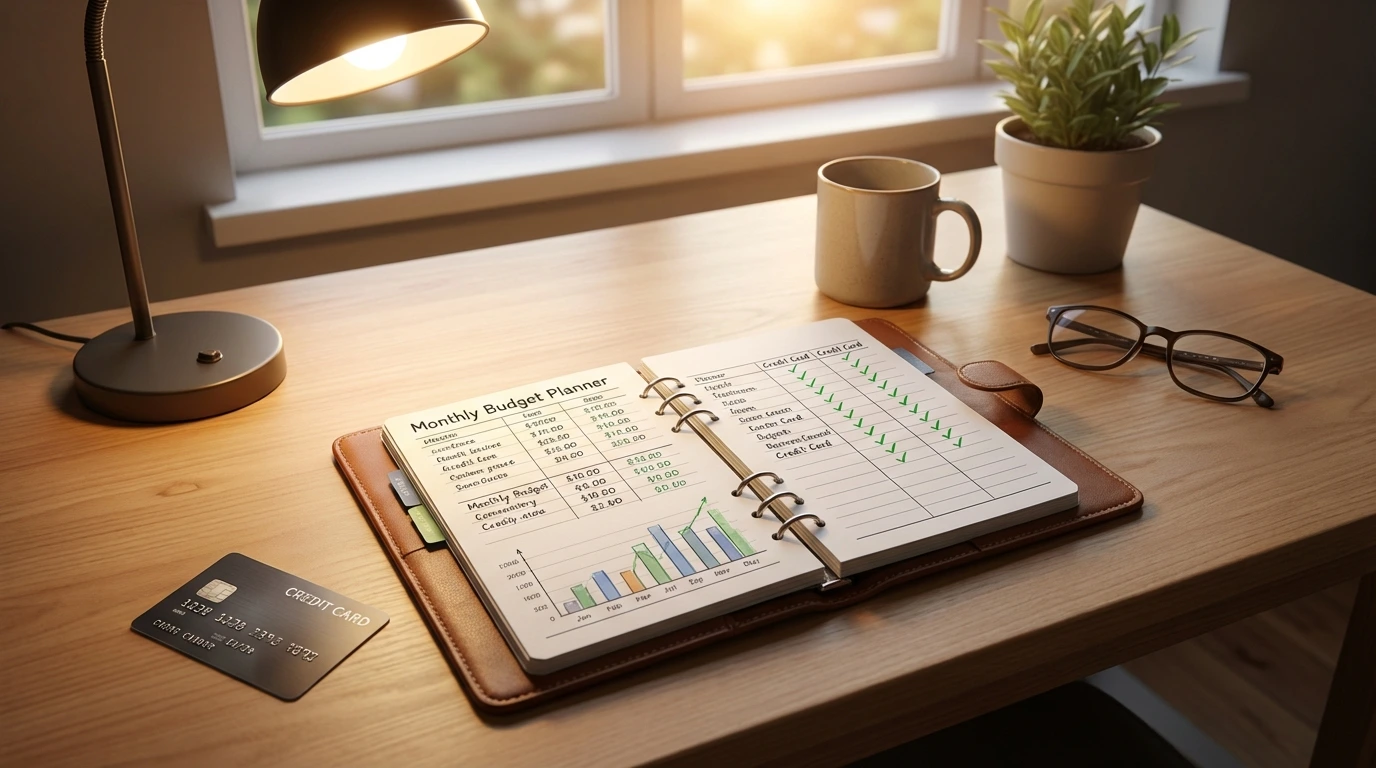
Create a Monthly Credit Card Budget
- List your monthly income: Know your take-home pay after taxes.
- Assign all fixed expenses first: Rent, utilities, insurance, subscriptions.
- Allocate discretionary spending: Groceries, dining, entertainment — set firm limits for each category.
- Total your planned card charges: Your budgeted credit card spend should never exceed what you can pay in full at month end.
- Review weekly: Check your card balance against your budget midway through the month to course-correct if needed.
Use Only One or Two Cards
Managing multiple credit cards makes it easy to lose track of total spending. Start with one card and add a second only when you’re consistently paying the first in full every month and have a clear reason (such as earning a different rewards category) for the second card. The simpler your credit card setup, the easier it is to stay in control.
Smart Spending Habits for Cardholders
Never Charge More Than 30% of Your Credit Limit
Your credit utilization ratio — how much of your available credit you’re using — is one of the most influential factors in your credit score. Keeping your balance below 30% of your credit limit is a widely recommended guideline, but the best scorers typically stay below 10%. Beyond the credit score impact, staying at low utilization means your monthly bills remain manageable and easy to pay off in full.
Avoid Cash Advances
Credit card cash advances are a different category of borrowing with no grace period, a higher APR than regular purchases, and an upfront fee of 3%–5% of the amount withdrawn. There is almost no situation where a cash advance makes financial sense. If you need emergency cash, look first to personal loans, family, or your emergency fund before touching a cash advance.
Review Every Statement
- Check for unauthorized charges or billing errors — disputing them is easier the sooner you catch them.
- Look for subscription charges you’ve forgotten about and may want to cancel.
- Monitor your spending categories to ensure they match your budget.
- Note your minimum payment due date and ensure autopay is set correctly.
Leverage Rewards Without Chasing Them
Rewards programs are excellent when they align with spending you’d do anyway. The moment you’re buying things you don’t need just to earn points, the rewards have become a liability rather than an asset. Use your card for planned, budgeted purchases and let the rewards accumulate naturally. Redeem them regularly so they don’t expire or become devalued.
Using Credit Cards to Build Your Credit Score
Pay On Time, Every Time
Payment history is the single largest factor in your credit score, accounting for roughly 35% of your FICO score. Even one 30-day late payment can significantly damage a strong credit profile. Autopay for at least the minimum payment protects you from missed payments, but always aim to pay the full balance to avoid interest charges.
Keep Accounts Open Long-Term
The average age of your credit accounts matters. Closing a credit card — especially an older one — reduces your average account age and can hurt your score. Unless a card has an annual fee you can’t justify, keep it open and make a small purchase every few months to prevent the issuer from closing it due to inactivity.
Be Strategic About New Card Applications
- Each credit card application results in a hard inquiry on your credit report, which temporarily lowers your score by a few points.
- Applying for several cards in a short period signals financial stress to lenders.
- Space out new applications by at least six months, and only apply for cards where you’re reasonably confident you’ll be approved based on your credit profile.
Conclusion
Using a credit card responsibly is fundamentally about one thing: never spending money you don’t have. Pay your full balance every month, automate your payments, track your spending against a real budget, and treat your credit limit as a convenience — not an extension of your income. The cardholders who come out ahead are those who use credit cards as a tool for convenience and rewards while keeping total control over their cash flow. With these habits in place, your credit card becomes one of the best financial tools available to you — not a source of debt or stress.
Read more at https://en.icardin.com/
